San Anselmo Concrete serves San Rafael homeowners with slab foundations, driveway replacement, retaining walls, and concrete patio construction. We know Marin County soils, pull permits through the City of San Rafael, and reply to every inquiry within one business day.
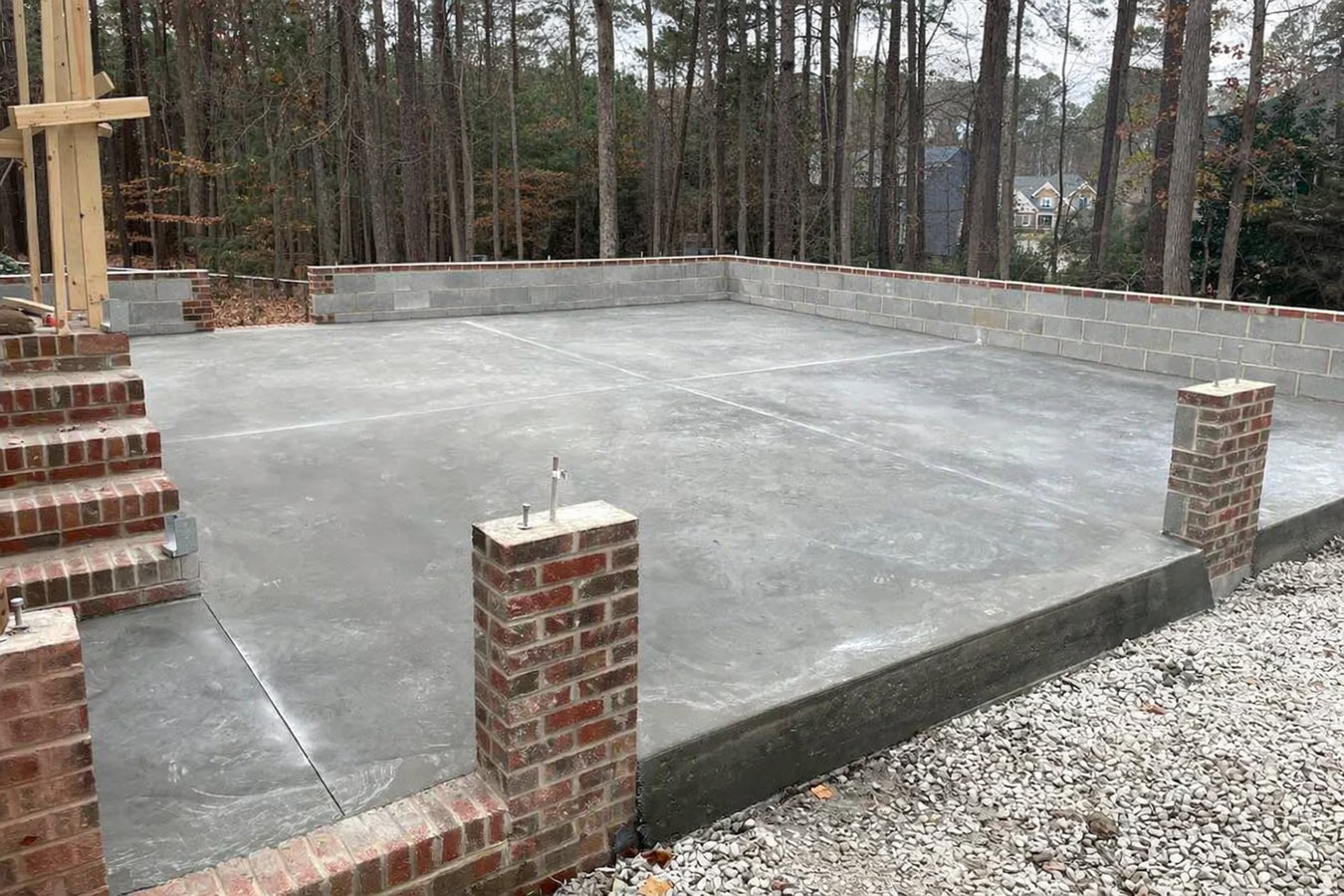
San Rafael has a large stock of pre-1980 homes - many from the 1940s through 1960s - and foundation work comes up regularly in this city. Whether you are converting a garage to living space, building an ADU, or replacing a deteriorated slab, our slab foundation building service accounts for Marin County clay soil movement and local seismic requirements from the start.
San Rafael's hillside neighborhoods - from the streets above downtown to the areas near Dominican University - have steep lots that depend on retaining walls to hold back soil. When clay expands in wet winters and the wall behind it was not built for that pressure, cracking and leaning follow quickly.
The ranch homes in Terra Linda and Sun Valley were mostly built in the 1950s and 1960s - and a lot of those original concrete driveways have never been replaced. After 60-plus years of clay-soil movement and California sun, the surface is often cracked, uneven, and no longer draining correctly.
Older neighborhoods in San Rafael have mature street trees whose roots have lifted and cracked public-facing sidewalk panels over decades. When a panel fails adjacent to your property, the City may hold you responsible for the repair. We handle both City-required panel replacements and private walkway installations.
San Rafael's long, dry summers make outdoor living genuinely usable from late spring through October. A poured concrete patio on a properly compacted base holds up better than pavers on hillside lots where clay movement would otherwise shift individual units out of level over time.
San Rafael is Marin County's seat and its largest city, and its housing stock reflects that history. A significant share of homes here were built before 1980, with many dating to the 1940s through 1960s. Postwar ranch homes in Terra Linda and Sun Valley, older Craftsman bungalows on the hillside streets above downtown, and denser housing in the Canal neighborhood each present different concrete challenges. A contractor who treats San Rafael as generic suburban California misses what makes each part of this city different.
The clay soils across much of Marin County are the underlying driver behind most concrete failures here. San Rafael averages around 37 inches of rain per year, nearly all of it between November and March. That concentrated moisture saturates the clay, which swells; then summer drying causes it to shrink. The seasonal cycle puts ongoing stress on slabs, footings, and retaining walls that were not designed with adequate base preparation. On sloped lots, drainage failures compound the problem - water that cannot move away from the structure works against it.
Hillside properties in San Rafael also sit in or near fire hazard severity zones designated by the California Department of Forestry and Fire Protection. While CAL FIRE fire hazard zones primarily affect roofing and vent materials, they can trigger additional City review for larger projects that include new structures or accessory units - something we account for in our permit prep.
We pull permits regularly through the City of San Rafael Community Development Department, which handles building permits for residential construction including foundations, retaining walls, and driveway connections to public streets. The City's review process is straightforward for most residential flatwork, but foundation and structural wall projects require additional documentation that our team prepares as part of every job.
San Rafael's neighborhoods range considerably in character and terrain. The Terra Linda and Sun Valley areas are flat to gently rolling suburban neighborhoods with standard lot access - most pour days here are routine. The hillside streets above Fourth Street and near Dominican University have steeper grades, narrower access, and more complex soil and drainage conditions. The Canal neighborhood, close to sea level in the southeastern part of the city, has its own drainage sensitivities. We assess each neighborhood's conditions before scheduling equipment and concrete trucks.
San Rafael sits between two of our other active service areas. We regularly work in San Anselmo to the west and Novato to the north, so if your project involves properties in more than one part of the county, coordinating across locations is not a problem.
Reach us by phone at (415) 604-1678 or through our online form. We respond to all new inquiries within one business day and will ask a few questions about the property before scheduling a visit.
We come to your San Rafael property to assess the site, soil, drainage, and any existing damage. You receive a written estimate with line-item detail before any work is scheduled - there is no cost and no obligation for the visit.
If your project requires a City of San Rafael permit, we prepare and submit the application on your behalf. Once approved, we schedule the work around weather and your availability.
Our crew handles demolition, base prep, forming, pouring, and finishing. Before we leave, we walk the finished work with you and explain the cure schedule - 7 days for foot traffic, 28 days before vehicle use.
We serve homeowners throughout San Rafael, CA. Call or fill out the form and we will respond within one business day with a clear, written estimate for your project.
(415) 604-1678San Rafael is Marin County's county seat and its largest city, with a population of around 61,000. It was incorporated in 1874 and sits roughly 15 miles north of San Francisco across the Golden Gate. The city spans a range of terrain - from the flat, sea-level Canal neighborhood in the southeast to steep hillside streets above downtown and suburban flatlands in Terra Linda and Sun Valley to the north. Fourth Street serves as the main downtown corridor, lined with local restaurants, shops, and the cultural anchors of the city center.
The residential neighborhoods reflect the city's long history. The hillside areas above downtown have Craftsman bungalows and Spanish-style stucco homes dating to the early 1900s, while Terra Linda and Sun Valley were developed primarily in the 1950s and 1960s with single-story ranch homes. The Marin County Civic Center, designed by Frank Lloyd Wright and completed in 1962, sits at the northern edge of the city and is one of the most recognized buildings in the Bay Area. Dominican University occupies a hilltop campus that has been part of San Rafael since 1890.
San Rafael borders San Anselmo to the west along the Ross Valley corridor. Novato lies to the north along Highway 101. The city is accessible via US-101 and Sir Francis Drake Boulevard, which connects to the smaller towns of the Ross Valley.
Durable concrete driveways designed for long-term performance and curb appeal.
Learn moreDecorative stamped concrete that adds texture and style to any surface.
Learn moreSafe, even concrete sidewalks built to meet local codes and last for decades.
Learn morePolished and decorative finishes that transform ordinary concrete into a feature.
Learn moreStructural concrete retaining walls that control erosion and grade changes.
Learn moreInterior and exterior concrete floors poured and finished to spec.
Learn moreSolid concrete steps that improve access and add structure to your property.
Learn moreProperly reinforced slab foundations for residential and commercial buildings.
Learn moreComplete foundation installation services for new construction projects.
Learn moreHeavy-duty concrete parking lots built for commercial and multi-unit use.
Learn moreServing these cities and communities.
Call San Anselmo Concrete for a free on-site estimate anywhere in San Rafael. Concrete work planned before the rainy season stays on schedule - reach out today and we will get your project in the queue.