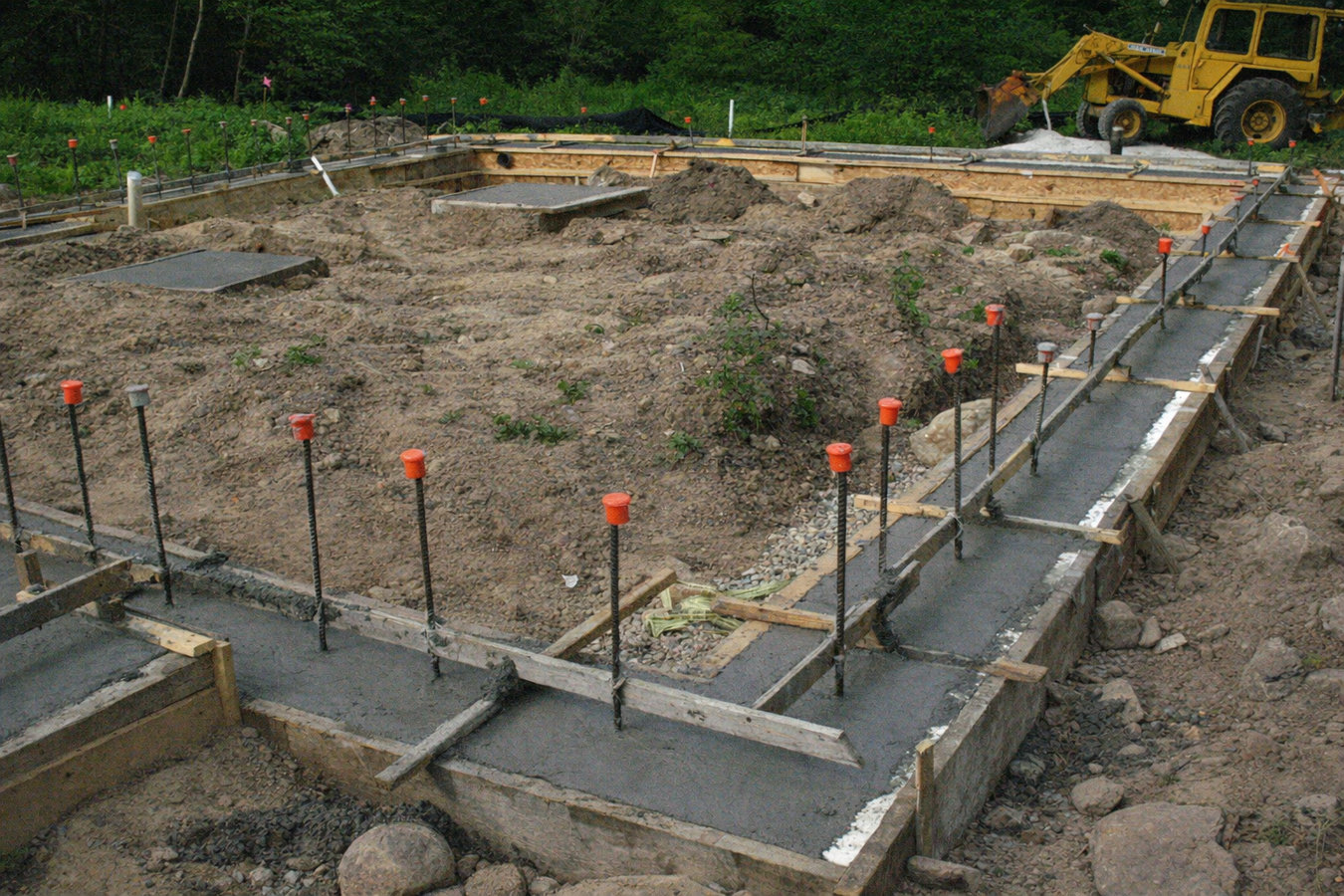
Every deck, addition, and ADU in San Anselmo starts here. We size and pour footings for local clay soils, hillside terrain, and California seismic requirements.
Concrete footings in San Anselmo means digging to the required depth for local soil and seismic conditions, setting forms and steel reinforcement, passing a building inspection before the pour, and curing the concrete before any structure is built on top - most residential footing projects take one to two days of active work, with permits adding one to three weeks to the front end of the schedule.
A footing is the hidden base that transfers the weight of whatever sits above it down into the ground. Without a properly sized footing, even a well-built deck, addition, or accessory dwelling unit can sink, tilt, or crack over time. In San Anselmo, where many lots sit on clay-heavy soils and hillside terrain, a footing that was built to a minimum standard rather than to actual site conditions is one that will cause problems sooner than it should. Most homeowners calling us are either starting a new project or dealing with the consequences of footings that were not right the first time.
Footing work for new projects pairs naturally with concrete retaining walls on sloped properties where both a structural base and grade control are needed at the same time.
If a door that used to swing freely now drags on the floor, or a window feels stiff in its frame, the structure may have shifted because a footing beneath it has settled or cracked. This kind of movement is especially common in older San Anselmo homes where original footings were shallow or undersized. It is worth having a contractor take a look before the shift gets worse.
Cracks that run at a 45-degree angle from the corners of openings are a classic sign that part of the structure has settled unevenly. In San Anselmo's clay-heavy soils, this kind of settlement can happen gradually over many wet-dry cycles. A single hairline crack may not be urgent, but multiple cracks or cracks that are growing wider deserve a professional evaluation.
Any new structure attached to or built near your home needs proper footings before anything else goes up. Accessory dwelling units have become increasingly popular in San Anselmo, and every one of them starts with footings. Getting this step right from the beginning protects everything built on top of it, including your investment in the structure.
If a deck post, porch column, or support pier is no longer plumb - meaning it leans or looks like it is sinking into the ground - the footing beneath it may have failed. On hillside properties in San Anselmo, this is sometimes caused by soil erosion or water moving through the ground during heavy rain. A leaning post means the footing is no longer doing its job.
Every footing project starts with a site visit, not a phone estimate. San Anselmo's varied terrain means that two properties on the same street can have very different soil conditions, slopes, and access constraints - none of which show up in a square footage calculation. We assess the actual ground conditions before sizing the footing, and we walk you through what we find rather than presenting you with surprises mid-project. Where a soils report is warranted, we flag that at the estimate stage so you can factor it into your planning.
Steel reinforcement is standard in every footing we pour in this area. Concrete is strong under compression but can crack when it is pulled or bent, and the clay soils common in Marin County create both types of stress through seasonal swelling and shrinking. Rebar placed inside the forms before the pour is what keeps the footing intact when the ground moves. California's building inspectors check rebar placement before the concrete goes in - which is one of the most important moments in the whole project. Projects that are part of a larger structural build can also include foundation installation when the scope calls for a full perimeter system rather than individual point footings.
Anchor bolts or rebar stubs that connect the footing to the structure above are built into every pour where the project requires it. These connections are what tie a deck, addition, or accessory unit to its base, and they are specifically required and inspected under California's seismic standards. The permit process in San Anselmo ensures these connections are verified before they are buried.
Suits new or replacement decks, porches, and covered outdoor structures that need point footings for each post.
Suits room additions, garage conversions, and backyard cottages that need a perimeter or continuous footing system.
Suits older San Anselmo homes where existing footings have settled, cracked, or no longer meet current seismic standards.
San Anselmo sits in a valley surrounded by hills, and a large share of its homes are on sloped or hillside lots, particularly in neighborhoods above Sir Francis Drake Boulevard. Hillside lots often have a mix of fill soil, clay, and bedrock at unpredictable depths. The crew may hit rock sooner than expected on one part of the property and find soft fill soil on another. A contractor who sizes your footings without accounting for this variability is sizing them for an average that may not match your actual ground. We assess the soil at your specific site before we write a number down.
The expansive clay soils common throughout Marin County create a seasonal stress cycle that standard minimum-depth footings are not designed to handle. Clay swells as it absorbs winter rain and shrinks back as it dries in summer. Over enough cycles, that movement can crack or shift footings that were built to meet the bare minimum rather than the actual soil behavior on your property. We account for this when we size every footing, going a bit wider or deeper than the minimum when conditions call for it. Homeowners in Mill Valley and San Rafael face the same clay soil conditions and we apply the same approach in both.
San Anselmo's residential neighborhoods also include a significant number of homes built before modern seismic and structural codes were in place, many dating from the 1920s through the 1960s. Homeowners adding a deck, room addition, or accessory dwelling unit to one of these older homes often discover that the existing foundation or adjacent footings do not meet current standards. We flag this during the estimate phase so you are not surprised mid-project, and can help you understand what upgrades are required versus what is optional. In Fairfax we work on the same vintage of housing stock on a regular basis.
Reach out by phone or through the contact form and we respond within one business day. We ask what you are building and schedule a site visit - usually 30 to 60 minutes - to look at the terrain, soil, and access at your specific property. You receive a written estimate with an itemized scope of work and a realistic timeline that includes the permit phase.
We apply for the building permit through the Town of San Anselmo's Community Development Department on your behalf. Plan review typically takes a few business days to a couple of weeks depending on the project's complexity. Your contractor handles all paperwork - you do not need to visit any office or fill out any forms yourself.
The crew digs to the required depth and width, sets forms, and places steel rebar according to the approved plan. Before any concrete is poured, the building inspector comes out to verify depth, width, and steel placement - this inspection is required and cannot be skipped. It is one of the most important checks in the whole project.
Once the inspector signs off, the concrete is poured, the surface is finished, and anchor bolts or rebar stubs are set where the structure will connect above. Cleanup happens the same day. The concrete needs about a week before it is strong enough to build on, and your contractor will let you know exactly when it is safe to proceed with the next phase.
We respond within one business day, visit your property before quoting anything, and handle the permit process from start to finish. No surprises at the inspection or on the invoice.
(415) 604-1678Clay soils in San Anselmo behave differently from property to property, and hillside lots add another layer of variability. We assess the soil at your specific site before sizing any footing, and we size for what the ground will actually do, not just what the code minimum allows. That difference is what separates a footing that stays stable for 30 years from one that starts cracking after five wet seasons.
San Anselmo sits close to both the San Andreas and Hayward fault systems, and California's building code reflects that. We install the rebar and anchor connections that keep your structure tied together when the ground moves, and we do not treat them as optional add-ons. The building inspector confirms this before the pour, so you have independent verification that the work was done correctly.
Unpermitted footing work on a San Anselmo home can become a serious problem when you sell. We pull the permit, coordinate the required inspections, and document everything correctly from the start. That paper trail is what tells future buyers, appraisers, and their inspectors that the structural work on your property was done right.
A meaningful share of San Anselmo's housing stock was built before current seismic and structural codes. We have worked on dozens of pre-1960s homes in this area and know what to expect when existing footings or foundations come into view during a project. If we find something that affects your scope, we tell you at the estimate stage, not after work has started.
The California Seismic Safety Commission and the American Concrete Institute both emphasize that proper reinforcement, adequate depth, and site-specific sizing are the three factors that most determine footing performance in high-seismic, expansive-soil environments. We apply all three on every project we take in San Anselmo.
When your project calls for a full perimeter foundation rather than individual point footings, we handle the complete installation.
Learn moreSloped San Anselmo lots often need both footings for a new structure and a retaining wall to control grade alongside it.
Learn moreThe permit process takes time, and the dry season fills up quickly. Call or reach out today so your project stays on schedule.